A farm feed room can get out of control surprisingly fast. Between bags of feed, supplements, buckets, scoops, hay supplies, animal-care items, and all the little things that somehow end up in the same space, even a small feed area can become cluttered before you know it.
The good news is that organizing it doesn’t require expensive cabinets or a picture-perfect barn makeover. A few practical changes can make everyday feeding faster, keep supplies easier to find, and make better use of the space you already have.
Whether you’re feeding chickens, goats, horses, cattle, or a mixture of animals, these budget-friendly ideas can help create a feed room that actually works for real farm life.
1. Give Every Type of Feed Its Own Container
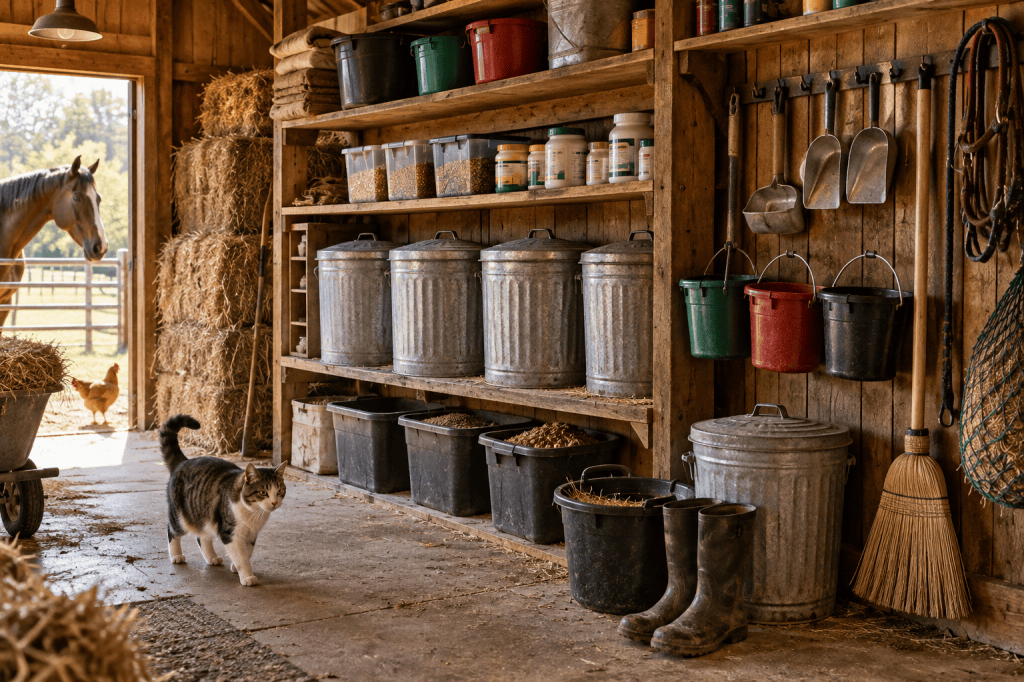
Open feed bags are easy to spill, attract pests, and quickly make a feed room feel cluttered. One of the simplest improvements is giving each type of feed its own sturdy container with a secure lid.
You don’t have to buy matching containers all at once. Galvanized trash cans, heavy-duty bins, and other food-safe storage containers can all work depending on what you’re storing. Use what fits your space and budget, and add more as you need them.
Label each container clearly so there’s no guessing which feed belongs to which animal. If several people help with feeding, simple labels can make the daily routine much easier and help prevent mix-ups.
Keep feed storage dry and follow the feed manufacturer’s storage directions. It’s also a good idea to use older feed before newer bags so nothing gets forgotten at the bottom of a container.
2. Create a Feeding Station for Scoops and Buckets
Scoops, buckets, measuring cups, and feed pans have a way of wandering all over the barn. Giving these everyday items one designated spot can make feeding much quicker.
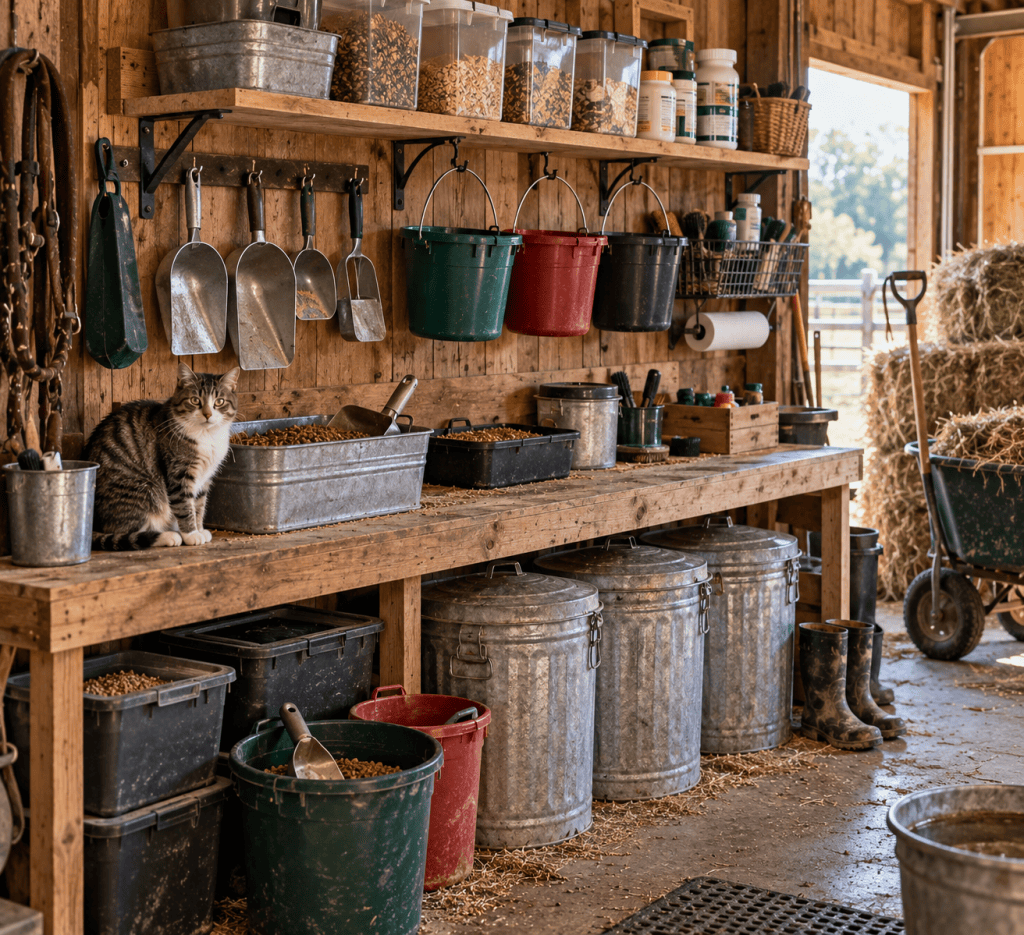
Hang frequently used buckets from sturdy wall hooks or keep them together on a simple shelf. Store each feed scoop beside the container it belongs with whenever possible. This is especially helpful when different animals receive different feeds or amounts.
You can also reuse things you already have. An old shelf, a small cabinet, a wooden crate, or even a row of sturdy hooks can become a practical feeding station without costing much at all.
Keep the floor underneath as clear as possible. The fewer buckets and supplies you have to step around while carrying feed, the easier the space is to use and clean.
3. Use the Walls Instead of the Floor
When floor space is limited, the walls can become some of the most useful storage in a feed room. Hooks, simple shelves, pegboards, and inexpensive wall-mounted organizers can hold many of the smaller things that otherwise end up piled on the floor or tossed into a corner.
Use sturdy hooks for lightweight buckets, halters, leads, small tools, and other frequently used supplies. Shelves can hold items you want within easy reach while keeping them away from curious animals.
You don’t need to cover every wall with storage. Start with the area closest to where you prepare feed and organize the things you reach for every day.
Whatever you mount, make sure it is securely attached and appropriate for the weight it will hold. In a working barn, practical and sturdy matters much more than making everything perfectly matched.
4. Keep Supplements and Small Supplies Together
Supplements, minerals, electrolytes, and other small containers can quickly take over a feed room if they don’t have a designated home. Instead of scattering them among the feed bins, keep them together in one easy-to-reach area.
A small shelf, inexpensive plastic bins, or baskets can work well for grouping supplies by animal. For example, you might have separate areas for horse, goat, cattle, and chicken supplies so you can quickly find what you need.
Keep everything in its original labeled packaging whenever possible, and pay attention to storage instructions and expiration dates. Items that need to stay especially dry or protected should be stored accordingly.
If you use medications or anything that could be harmful if accidentally eaten, keep those securely stored away from feed and completely out of reach of animals and children.
5. Make a Separate Spot for Hay and Forage Supplies
Hay and forage supplies can take up a lot of room, so giving them a designated area helps keep the rest of the feed space manageable. Even if you don’t have a separate hay barn, deciding exactly where these supplies belong can prevent them from slowly taking over every available corner.
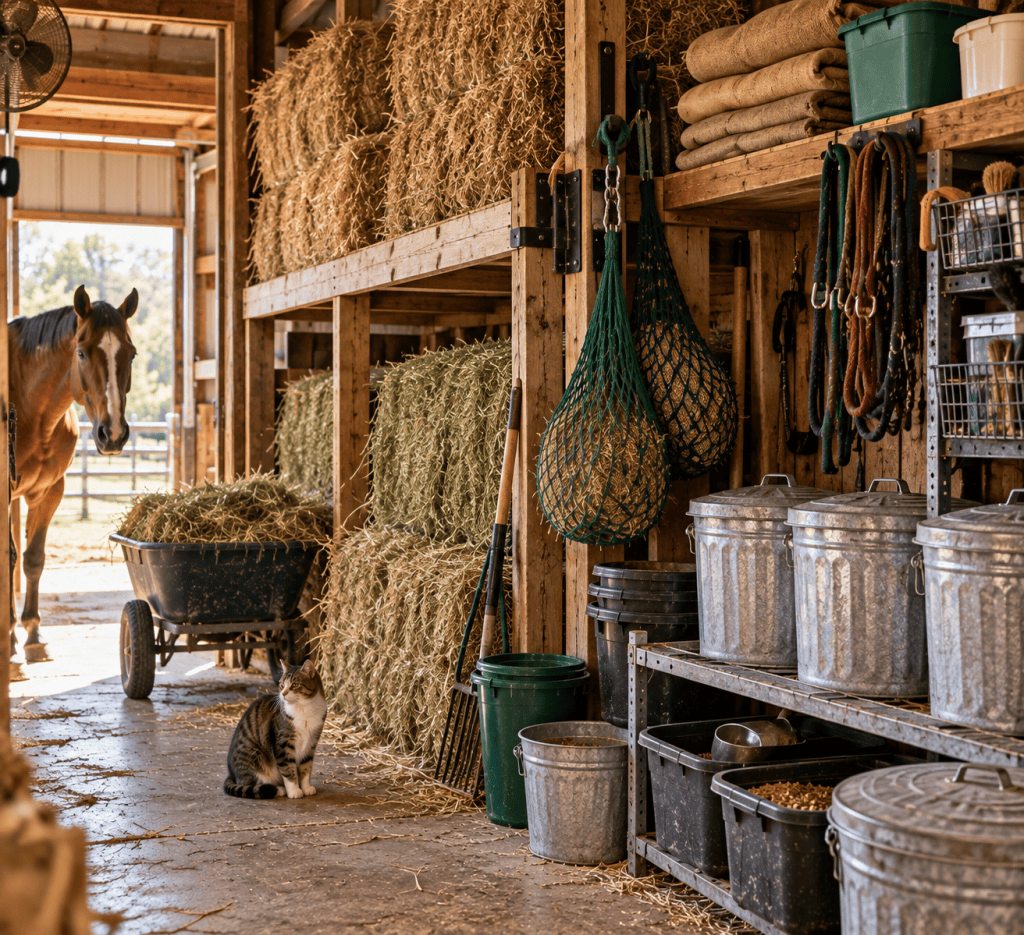
Keep hay in a dry, well-ventilated location and off damp ground. Pallets or another appropriate raised surface can be useful when the storage area allows for it. Avoid packing hay tightly against anything that could introduce moisture or interfere with airflow.
Keep hay nets, bags, twine cutters, and other frequently used supplies nearby so you aren’t searching for them at feeding time. A few sturdy hooks or a simple bin may be all you need.
Most importantly, regularly check stored hay for moisture, excessive heat, mold, or other signs of spoilage. Proper hay storage is about more than organization—it’s also an important part of barn and animal safety.
6. Set Up a Simple Cleaning Station
Feed dust, spilled pellets, bits of hay, and dirt are just part of having a working feed room. Keeping a few basic cleaning supplies nearby makes it much easier to tidy up small messes before they become big ones.
Hang a broom and dustpan on the wall, keep a small trash can nearby, and designate a spot for anything else you regularly use to clean the area. Wall-mounted storage is especially helpful because it keeps these items handy without taking up valuable floor space.
Try to sweep up spilled feed regularly rather than leaving it overnight. Besides making the room easier to work in, removing spills and keeping feed containers securely closed can make the area less inviting to rodents and other pests.
A farm feed room will probably never stay spotless—and it doesn’t need to. The goal is a space that is safe, manageable, and easy to reset after the daily feeding routine.
7. Organize by the Way You Actually Feed
A feed room doesn’t have to look like something from a magazine to be well organized. The best setup is the one that makes your everyday feeding routine easier.
Think about the order you normally feed your animals and arrange your most-used supplies accordingly. If you feed the horses first, for example, keeping their feed, scoop, and frequently used supplies together can save you from walking back and forth across the room. Do the same for goats, cattle, chickens, or any other animals you care for.
Keep everyday items within easy reach and move things you rarely use to higher shelves or less convenient storage areas. You may find that simply rearranging what you already own makes a bigger difference than buying more organizers.
And don’t be afraid to change the setup later. Farm routines change with seasons, animals, and feeding needs, so a good feed room should be able to change with them.
A Feed Room That Works for Real Farm Life
Organizing a farm feed room doesn’t have to mean buying a room full of matching containers or starting an expensive barn makeover. Often, the biggest improvements come from giving everything a designated place and arranging the space around the way you actually care for your animals.
Start small. Secure the feed, clear some floor space, hang up the things you use every day, and group supplies where they make sense. You can always improve the system a little at a time as your budget and needs change.
A working farm is never going to stay perfectly tidy—and that’s okay. At Cartecay James, we’d rather have a practical space that makes caring for the animals easier than a picture-perfect feed room that doesn’t work for everyday life. ❤️
 Cartecay James
Leave a comment