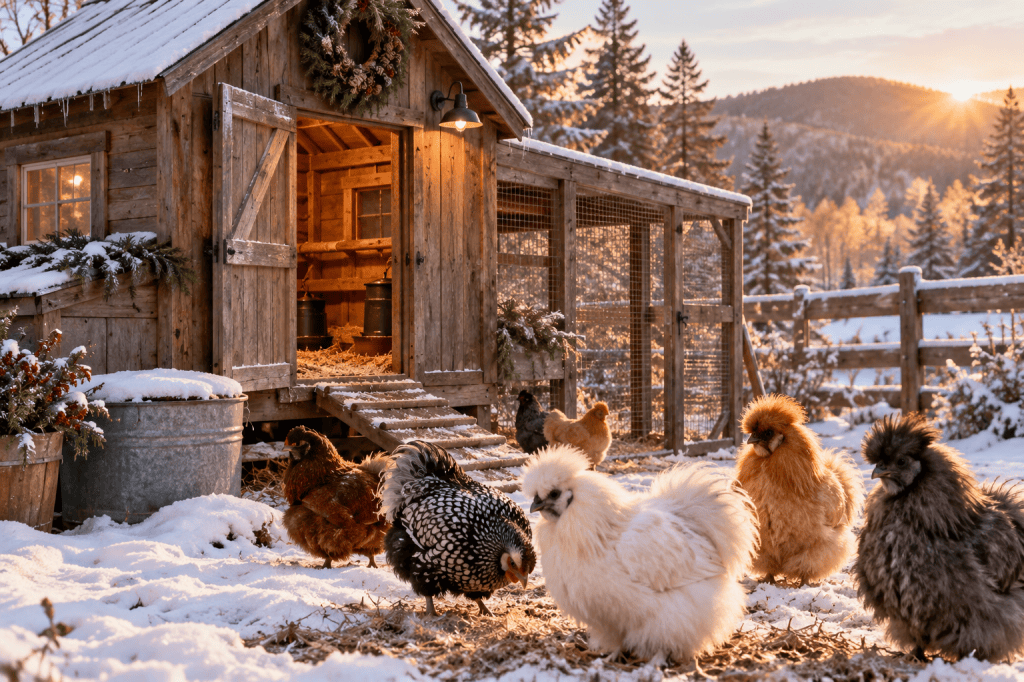
Cold weather doesn’t necessarily mean your chickens need a heated coop, but winter does bring a few challenges that are much easier to handle before temperatures drop.
Frozen water, damp bedding, cold wind, muddy runs, and long days spent inside can make winter harder on a flock—and on the person caring for them.
The good news is that preparing a chicken coop for winter doesn’t have to mean an expensive makeover. A few practical changes can help keep your chickens dry, comfortable, active, and easier to care for throughout the colder months.
Here are eight things to check before winter weather arrives.
1. Stop Cold Drafts Without Closing Off Ventilation
It’s tempting to close every opening in the coop once cold weather arrives, but chickens still need fresh air during winter.
Instead, look for drafts that blow directly across the chickens where they sleep. Cracks around doors, damaged boards, or openings near roost level may need attention before temperatures drop.
At the same time, keep appropriate ventilation higher in the coop so moisture can escape. Chickens produce moisture through breathing and droppings, and a damp coop can cause more problems than a chilly but dry one.
The goal isn’t to make the coop airtight or warm like your house. It’s to give your flock a dry, well-ventilated space without cold wind blowing directly on them.
2. Keep the Coop Bedding Dry and Manage Moisture
Dry bedding matters just as much in winter as warmth. Wet bedding holds moisture inside the coop, creates unpleasant ammonia odors, and makes the space much less comfortable for your flock.
Before cold weather settles in, clean out any damp or heavily soiled bedding and start with a fresh, dry layer. Pine shavings are a popular option, although the best bedding will depend on your particular coop setup.
During winter, check areas underneath the roosts and around waterers especially often. Those are usually the first places to become damp. Remove wet spots as you find them rather than waiting until the entire coop needs to be cleaned.
Some chicken keepers use a deep-litter system during colder months, while others prefer replacing bedding regularly. Either approach can work—the important part is keeping the coop dry, clean, and well ventilated.
A simple habit of checking the bedding when you collect eggs or refill water can help you catch moisture before it becomes a bigger problem.
3. Keep Drinking Water From Freezing
Fresh water is one of the biggest everyday challenges when caring for chickens during winter. Once temperatures stay below freezing, an ordinary waterer can freeze surprisingly quickly.
Check your flock’s water regularly and make sure they always have access to clean, unfrozen drinking water. If you live somewhere that gets repeated freezing temperatures, a poultry-safe heated waterer or heated waterer base can make winter chores much easier.
Whatever setup you use, keep the waterer on a stable surface and position it where spills won’t soak the coop bedding. If you use an electrical product, follow the manufacturer’s instructions and use only equipment and connections intended for the conditions where they’ll be used.
It’s also worth checking the waterer each day even when you’re using a heated system. Winter equipment can fail, and chickens still need reliable access to water throughout the day.
The goal is simple: clean, unfrozen water without creating extra moisture inside the coop.
Make frozen-water mornings easier: If freezing water is a regular winter problem, a poultry-safe heated waterer or heated waterer base can save a lot of trips outside to break ice and refill frozen containers. Choose one that works with your coop setup and follow the manufacturer’s instructions for safe use.
4. Make the Chicken Run More Usable in Winter
Chickens may spend more time around the coop during winter, but they still benefit from getting outside to scratch, explore, and move around whenever the weather allows.
Before winter arrives, look around the run for areas that become especially muddy, wet, or exposed to wind. Giving your flock even one protected, reasonably dry area can make the run much more inviting on cold days.
A covered section can help protect part of the run from rain, snow, and sleet. Depending on your setup, you may also be able to add a windbreak on the side that receives the strongest winter winds—while still maintaining plenty of airflow.
Pay attention to the ground, too. Wet, churned-up mud isn’t much fun for chickens. Appropriate dry material in problem areas can give them somewhere more comfortable to walk and scratch.
Don’t worry about making the entire run weatherproof. A dry place to scratch, some protection from harsh weather, and room to move can make a surprisingly big difference.
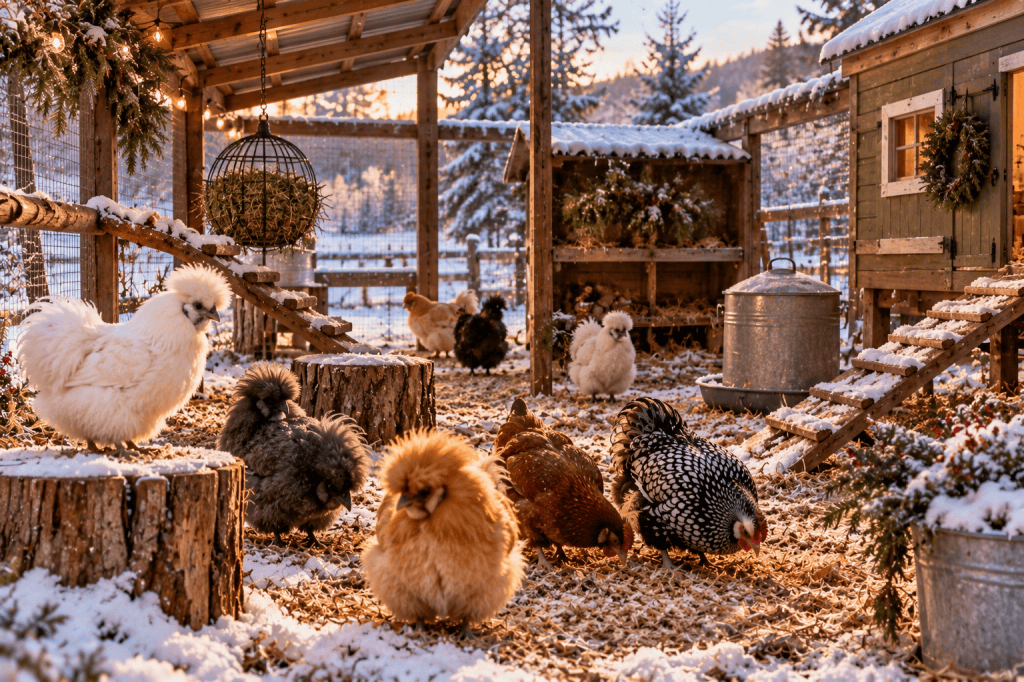
5. Give Them Places to Get Up Off Cold or Wet Ground
Chickens naturally look for places to perch, and those raised areas become especially useful when winter weather leaves parts of the run cold, muddy, or wet.
Add a few sturdy places where your flock can get their feet off the ground. Logs, stumps, thick branches, low platforms, or securely placed outdoor roosts can all work well.
You don’t need anything fancy. In fact, some of the best additions may already be lying around your property. Just make sure anything you add is stable, free from sharp edges, and positioned where chickens can get on and off safely.
Giving chickens different levels also adds a little extra activity to otherwise boring winter days. They can hop, perch, explore, and choose where they’re most comfortable.
Sometimes a simple old stump becomes the most popular piece of “chicken furniture” in the entire run.
6. Prevent Winter Boredom With Simple Enrichment
Winter can mean shorter days, less time exploring the yard, and more hours spent around the coop and run. That can leave an active, curious flock with a lot less to do.
You don’t need expensive chicken toys to keep them occupied. Give them opportunities to do the things chickens naturally enjoy most—scratching, pecking, foraging, climbing, and exploring.
Toss a small amount of treats or scratch into clean, dry bedding or leaves so they have to hunt for it instead of eating everything from a bowl. Hang chicken-safe greens where they can peck at them, add logs or branches to investigate, or occasionally rearrange items in the run so the space feels different.
On days when your flock spends more time confined because of snow, ice, or bad weather, a few simple activities can make their environment much more interesting.
You can even rotate enrichment instead of putting everything out at once. Something as simple as bringing back an old log, hanging greens in a different spot, or adding a fresh pile of leaves can give curious chickens something new to investigate.
Winter enrichment doesn’t have to be complicated—the goal is simply to give chickens something safe and interesting to do.
Want an easy winter boredom buster? I’ve gathered some of my favorite chicken treats and enrichment finds for keeping curious chickens busy when they’re spending more time around the coop.
7. Check Combs, Wattles & Feet During Cold Weather
Winter is a good time to get into the habit of giving your chickens a quick once-over each day. You don’t need to turn it into a complicated health check—just pay attention to anything that looks different from normal.
Combs and wattles are especially exposed during very cold weather, particularly on breeds with larger combs. Watch for unusual changes in color, swelling, or damaged-looking tissue, and keep an eye on chickens that seem reluctant to leave the coop during extreme cold.
Feet deserve attention too. Snow, ice, frozen mud, and wet bedding can create problems, so check that feet are clean and free of anything stuck to them. Keeping the coop and the areas where chickens spend most of their time dry is one of the most useful things you can do during winter.
This is also a good opportunity to watch the whole flock. A chicken that suddenly isolates herself, stops eating or drinking, seems unusually lethargic, or simply isn’t acting like herself deserves closer attention.
Knowing what is normal for your individual chickens makes it much easier to notice when something changes.
A little extra cold-weather care: For chickens with exposed combs and wattles, I like keeping a poultry-safe comb and wattle balm on hand as part of the winter-care supplies.
8. Set Up Your Winter Chicken Supplies Before You Need Them
The easiest time to prepare for freezing weather is before the first really cold morning arrives.
Take a few minutes to gather the winter supplies you know you’ll use and keep them somewhere easy to reach. Depending on your setup, that might include extra dry bedding, a backup waterer, feed and treats, a safe way to deal with frozen water, and the cold-weather care products you keep on hand.
It’s also a good time to inspect anything you’ll rely on during winter. Check waterers for cracks or leaks, make sure feed containers close securely, and replace worn or damaged equipment before you’re trying to deal with it on a freezing morning.
Keep a little extra feed and bedding on hand when severe weather is expected, especially if icy roads or snow could make a trip to the feed store difficult.
You don’t need a barn full of special winter equipment. A few dependable supplies, organized ahead of time, can make cold-weather chicken chores much easier.
Winter Chicken Care Doesn’t Have to Be Complicated
Chickens are often more cold-hardy than we give them credit for. Preparing for winter is less about trying to keep the coop warm like a house and more about providing the basics: a dry, well-ventilated coop, protection from direct drafts, unfrozen water, appropriate food, and a safe place to move around.
Pay attention to your own flock and your local weather. Different breeds, ages, and individual chickens may handle cold differently, so let what you see in your coop guide your routine.
With a little preparation before temperatures drop, winter chicken keeping can become just another season on the farm—and sometimes those quiet, frosty mornings with the flock are some of the prettiest ones. 🐔❄️
Getting your flock ready for winter? I’ve gathered my favorite practical chicken-keeping supplies, treats, enrichment finds, and other things I use or recommend for making everyday flock care a little easier.


Leave a comment