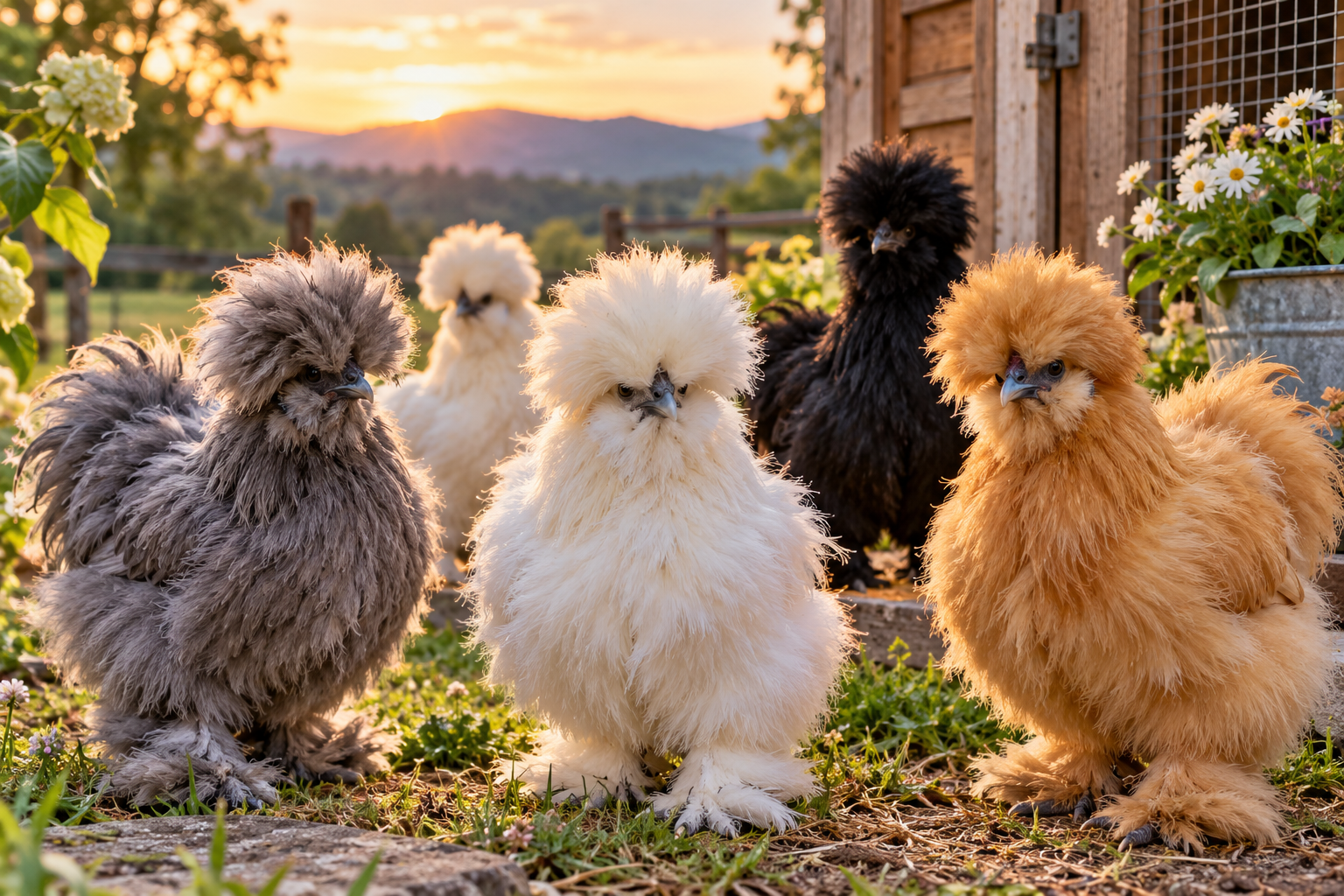
Silkie chickens have a way of making people fall in love with them before they ever bring one home. With their fluffy feathers, round little crests, feathered feet, and sweet personalities, they hardly look like ordinary chickens at all.
But Silkies are a little different from the average backyard chicken—and there are a few things I think every new Silkie owner should know.
They may need a little extra consideration when it comes to housing, wet weather, predators, and even where they sleep. And if you’re expecting them to behave exactly like the rest of your flock, they may surprise you.
After keeping Silkies myself, I’ve learned that some of their quirks are actually part of what makes them so lovable.
If you’re thinking about adding Silkies to your flock, here are 11 things to know before bringing those fluffy little chickens home.
1. Their Fluffy Feathers Aren’t Like Regular Chicken Feathers
One of the first things you’ll notice about a Silkie is that all that fluff feels much more like soft fur than ordinary chicken feathers.
That’s because Silkie feathers don’t have the tiny hooks that normally hold a chicken’s feather strands together. Instead of forming a smooth, structured feather, they stay loose and fluffy—which gives Silkies their wonderfully round, fuzzy appearance.
As adorable as it is, that fluff also means Silkies need a little different care.
Their feathers don’t shed water the way normal chicken feathers do, so a Silkie can become wet much more easily in rain or damp conditions. Once all that fluff is soaked, it can take quite a while to dry, especially during cooler weather.
A covered area in the run is helpful so they always have somewhere dry to get out of the rain. I also like keeping an eye on their fluffy feet and underside during muddy weather since dirt and moisture can collect there more easily.
It’s one of those little differences that isn’t difficult to manage—you just need to know about it before bringing Silkies home.
And that ridiculous fluff is absolutely part of their charm. ❤️
2. Silkies Aren’t Great Flyers
If you’re used to watching regular chickens hop onto fences, fly up to high roosts, or somehow end up somewhere you were absolutely certain they couldn’t reach, Silkies may surprise you. 😂
Because of their unusual fluffy feathers, Silkies generally aren’t strong flyers. Many barely fly at all.
That can actually make them easier to keep contained, but it also means their coop and run should be set up with their limitations in mind.
High roosting bars that work perfectly well for other chickens may be difficult for a Silkie to reach. If you do provide roosts, keeping them fairly low—or adding a little ramp or step—can make them much easier to use.
The same goes for nesting boxes. If your boxes are raised very high off the floor, make sure your Silkies have an easy way to get into them.
And then there are the Silkies who look at the perfectly nice roost you provided and decide:
“No thank you. We’ll sleep in a pile.” 😂
It’s very common to find several Silkies snuggled together on the coop floor at night in what chicken keepers affectionately call a “cuddle puddle.”
As long as their sleeping area stays clean, dry, secure from predators, and has good ventilation, I don’t worry too much about convincing mine that they’re supposed to sleep like everybody else.
Sometimes you just have to let a Silkie be a Silkie. ❤️

3. Those Big Fluffy Crests Can Affect Their Vision
One of the prettiest things about a Silkie is that wonderful fluffy crest on top of its head—especially on the really full, showy birds. ❤️
But sometimes all that fluff comes with a downside: they may not be able to see very well through it.
A large crest can partially block a Silkie’s vision from the sides or even directly in front of its eyes. You may notice a particularly fluffy Silkie startling when you approach, hesitating in unfamiliar areas, or simply not noticing something the rest of the flock sees immediately.
Poor visibility can also make a Silkie more vulnerable around larger chickens and predators.
I like to periodically check around the eyes and make sure the feathers aren’t causing a problem. If a crest becomes excessively long or dirty, a very careful little trim around the eye area can sometimes help—just be extremely cautious around the eyes and the skin beneath all that fluff.
Keeping feeders, waterers, ramps, and other important things easy to find also helps.
And before deciding that your Silkie isn’t particularly bright because she walked right past the treat you tossed her…
make sure she could actually see it. 😂🐔
4. Silkies Need a Little Extra Protection From Predators
Silkies may look like tiny fluffy clouds wandering around the yard, but unfortunately that can make them especially vulnerable to predators.
They generally can’t fly away well, their large crests may limit how much they can see around them, and their calm personalities don’t exactly turn them into the world’s greatest escape artists. 😂
That means I’m especially careful about giving Silkies a secure coop and protected run.
Hardware cloth is a much better choice for vulnerable areas than standard chicken wire. Chicken wire is useful for keeping chickens in, but it isn’t designed to keep determined predators out. Pay particular attention to doors, corners, vents, gaps around the roofline, and anywhere something might be able to dig underneath the run.
A covered run is also worth considering. It gives Silkies protection from aerial predators while providing the dry area their fluffy feathers appreciate during wet weather.
And because Silkies may not notice danger as quickly as some other chickens, I wouldn’t rely on their instincts alone to keep them safe.
Their fluff may make them look fearless. Their actual survival strategy is sometimes closer to standing there looking adorable. 😂❤️🐔
Making a Silkie run more secure? I prefer sturdy hardware cloth for vulnerable areas of the coop and run because it creates a much stronger barrier than ordinary chicken wire.
5. Silkie Hens Can Be Very Broody 😂🥚
If you’re hoping for a chicken that takes motherhood seriously, a Silkie may be exactly what you’re looking for.
Silkie hens are well known for going broody, which means they decide they want to sit on a nest and hatch eggs. And once a determined Silkie has made up her mind, she can be remarkably committed to the job.
A broody Silkie may spend most of the day sitting in a nesting box, fluff herself up when you reach toward her, make little warning noises, and leave the nest only briefly to eat, drink, and relieve herself.
Some Silkies will even happily sit on eggs that aren’t their own. Chicken keepers sometimes use dependable broody Silkies to hatch eggs from other breeds because they can be such devoted little mothers.
But broodiness isn’t always convenient.
If you don’t want chicks, you’ll need to collect eggs regularly and keep an eye on a hen that refuses to leave the nest. Sitting for long periods can cause her to eat and drink less, lose condition, and spend more time away from normal flock activities.
And don’t assume that removing the eggs will necessarily convince her that motherhood has been canceled.
She may have already committed to the lifestyle. 😂
If you do decide to let a Silkie hatch fertile eggs, make sure she has a safe, clean nesting area with food and fresh water easily accessible, and have a plan for the chicks before hatch day.
6. Their Feathered Feet Need a Little Extra Attention 🐔
Those fluffy little feet are another part of what makes Silkies so adorable—but they can also require a bit more attention than the clean-legged chickens in your flock.
Because Silkies have feathers growing all the way down their legs and onto their toes, mud, wet bedding, manure, and other debris can get caught in those feathers more easily.
This is especially noticeable during rainy weather.
Keeping the coop and run as dry as possible makes a big difference. I like having plenty of dry areas where Silkies can get completely out of the mud, especially since their fluffy body feathers aren’t particularly water resistant either.
It’s also a good habit to occasionally pick up your Silkies and check their feet rather than assuming everything looks fine underneath all that fluff.
Look between the toes and around the feathered areas for anything that’s stuck, tangled, irritated, swollen, or unusual. Their toenails may also need occasional attention depending on the surfaces they spend most of their time walking on.
Winter can bring another issue in colder climates: wet feathered feet can collect snow and ice, so keeping their bedding and sheltered areas dry becomes even more important.
Most of the time, Silkie feet don’t require anything complicated.
They just benefit from somebody actually looking underneath all those adorable little feather pants once in a while. 😂❤️

7. Silkies May Need a Little Help in a Mixed Flock 🐔
Silkies are generally gentle, easygoing chickens, which is one of the reasons they’re so lovable. Unfortunately, that sweet personality can sometimes make them an easy target for more assertive birds.
This doesn’t mean Silkies can’t live happily in a mixed flock. Many do. But I think they’re worth watching a little more closely, especially when introducing new chickens or keeping them with larger, more dominant breeds.
Their big fluffy crests can also limit how well they see what’s happening around them. A Silkie may not notice another chicken approaching as quickly as a clean-headed breed would, and because Silkies aren’t strong flyers, they have fewer ways to escape if another bird decides to chase them.
Make sure there are multiple places to eat and drink so a timid Silkie isn’t being pushed away from the only feeder. Little hiding places, low obstacles, and quiet corners can also give them somewhere to get away without needing to fly onto a high perch.
And pay attention to the subtle signs of bullying. It isn’t always dramatic fighting. Sometimes it’s one chicken repeatedly chasing another away from food, guarding a doorway, pulling crest feathers, or keeping a quieter bird separated from the flock.
Some Silkies do perfectly well with standard-size chickens, while others seem happiest with other Silkies or similarly gentle breeds.
The individual personalities in the flock matter much more than simply assuming certain breeds will always get along.
8. Their Fluffy Feathers Need a Little Extra Attention 🐔
One of the best things about Silkies is also one of the things that makes their care a little different: all that fluff.
Unlike the smooth, tight feathers of most chickens, Silkie feathers are soft and almost fur-like. They’re beautiful, but they don’t handle wet and muddy conditions quite as well as regular feathers.
Keeping their coop and favorite resting areas dry and clean is especially important. If a Silkie gets soaked during cold weather, bring her somewhere sheltered and allow her to dry completely before putting her back outside.
Their fluffy feet deserve attention, too. Mud can collect around the feathers on their toes, and during freezing weather wet feathered feet can become a bigger concern. I like to check feet regularly for dried mud, injuries, or anything caught in all that feathering.
It’s also worth occasionally checking around their crest, beard, vent, and under their wings. Those fluffy areas can make it harder to notice mites, lice, irritated skin, or small injuries until you’re looking closely.
And don’t be afraid to gently trim a few crest feathers if they’re interfering with a Silkie’s vision. You don’t have to ruin that adorable pom-pom—sometimes just opening up the area immediately around the eyes can make a big difference.
Silkies aren’t necessarily harder to keep than other chickens. They’re just built a little differently.
Once you know what to watch for, those extra little checks simply become part of loving a Silkie flock. ❤️
9. Silkies Aren’t Usually Heavy Egg Layers 🥚🐔
If your main goal is to fill the egg basket every day, Silkies probably aren’t the breed you’d choose strictly for production.
Silkie hens do lay eggs, but they generally aren’t known for the high production you might get from breeds developed specifically for laying. Their eggs also tend to be small to medium-sized, with shells that are usually cream or lightly tinted.
And then there’s that broodiness we talked about earlier. 😂
When a Silkie decides it’s time to become a mother, egg production can take a back seat while she concentrates on sitting on a nest—even if there isn’t a single fertile egg underneath her.
Season, age, daylight, nutrition, molting, stress, and the individual bird can all affect how often a hen lays, so don’t be surprised if two Silkies have very different laying patterns.
For me, Silkies are much more about the whole experience of keeping them than maximizing the number of eggs in the refrigerator.
They’re quirky, beautiful little chickens with personalities that can make you ridiculously attached to them.
Think of the eggs as a lovely bonus that occasionally comes with your fluffy backyard entertainment. 😂❤️
10. Silkies Still Need Protection From Weather Extremes ☀️❄️🐔
All that fluff can make Silkies look like they’re wearing tiny built-in winter coats, but their unusual feathers don’t protect them from the weather quite the same way normal chicken feathers do.
We’ve already talked about how easily Silkie feathers can become wet, but summer heat deserves just as much attention as cold and rain.
During hot weather, make sure your Silkies have plenty of shade, good airflow, and fresh, cool water available throughout the day. Watch your whole flock for signs that they’re struggling with the heat, especially during particularly hot and humid stretches.
In winter, the biggest priorities are keeping their sleeping area dry, well ventilated, and protected from drafts and blowing precipitation. A dry Silkie can handle cool weather much better than one that’s wet through all that fluff.
This is also where their low-to-the-ground lifestyle matters. Since some Silkies would rather pile together on the coop floor than use a traditional roost, make sure the area where they actually choose to sleep stays clean and dry—not just the roosting bars you hoped they’d use. 😂
You don’t necessarily need an elaborate heated coop. In fact, good shelter, ventilation, dry bedding, unfrozen water, and protection from severe weather are much more important basics to get right.
Basically, don’t let the fluff fool you into thinking they’re tiny weatherproof chickens.
They are very fluffy.
They are very cute.
They are not waterproof. 😂🐔❤️

11. Their Personalities May Be the Best Thing About Them
The fluffy feathers may be what first makes people notice Silkies, but their personalities are often what make people fall completely in love with them.
Many Silkies are gentle, curious, and surprisingly social. Some will follow you around the yard, come running when they hear your voice, or stand at your feet waiting to see whether you’ve brought something interesting.
Of course, every chicken has her own personality. Some Silkies are cuddly little lap chickens, while others would prefer that you admire their fabulous hair from a respectful distance. 😂
Because they’re generally calm birds, spending a little time around them regularly can help them become comfortable with people. Moving slowly, offering treats by hand, and simply sitting quietly around the flock can go a long way toward building trust.
And once you keep Silkies for a while, you start recognizing all their individual quirks—the bossy one, the shy one, the one who is always broody, and the one who somehow manages to get herself into situations that none of the other chickens do.
They’re not the biggest chickens.
They’re not the best flyers.
They’re certainly not the most weatherproof.
And they may not fill your egg basket every morning.
But somehow those funny little fluffy chickens have a way of becoming some of the biggest personalities in the entire flock.
And that might be the most important thing to know before getting Silkies: it’s very difficult to stop at just one. 😂❤️🐔
Before You Bring Home Your First Silkie ❤️🐔
Silkies are definitely a little different from the average backyard chicken.
They can’t fly very well, their fluffy crests can make it harder for them to see, their feathered feet need a little extra attention, and sometimes they’d much rather sleep in a fluffy pile on the floor than use the perfectly good roost you provided. 😂
But those quirks are also a big part of what makes them so special.
Give them a safe, dry coop, a predator-secure run, good food and fresh water, protection from extreme weather, and a little extra attention to all that fluff, and Silkies can be such a fun addition to a backyard flock.
Most of all, don’t worry about making everything perfect before bringing them home. Learn their personalities, watch how they interact with the rest of your flock, and adjust their setup as you learn what works for your birds.
Because once a few fluffy little Silkies start waddling toward you across the yard, there’s a pretty good chance you’ll understand why so many chicken keepers become completely obsessed with them.
Ask me how I know. 😂❤️
Getting ready for Silkies of your own? I’ve gathered some of my favorite chicken-keeping finds for creating a safe, comfortable coop and run—from practical everyday supplies to a few things that simply make keeping chickens easier.
Leave a Reply