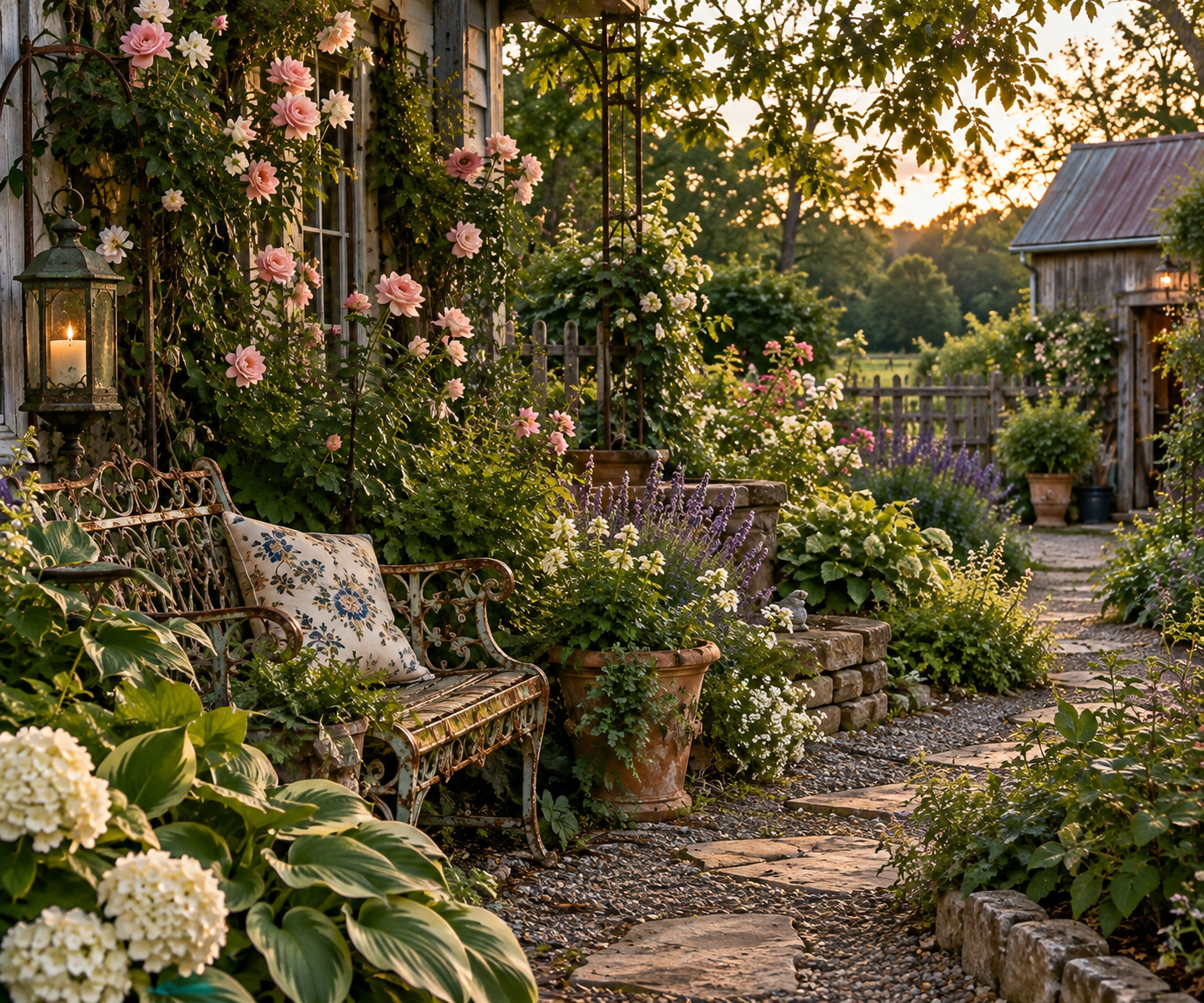
There’s something about an English cottage garden that feels a little bit magical.
Instead of perfectly spaced plants and neat rows, flowers seem to tumble into one another, roses climb over fences, tall blooms peek out from behind shorter ones, and pathways almost disappear beneath all that color and greenery.
The secret isn’t having an enormous garden—or spending a fortune filling it.
It’s choosing the right mix of plants.
Traditional cottage gardens combine romantic flowers, different heights, soft textures, repeating colors, and plenty of blooms so the garden feels full and established rather than carefully arranged.
And you don’t have to use only pink. ❤️ Dusty blues, lavender, creamy white, peach, burgundy, soft yellow and deep purple can make a cottage garden feel even more collected and interesting.
Whether you’re starting an entire garden or simply trying to make one little corner of your yard feel more romantic, these eight flowers are a beautiful place to begin.
Here are 8 of my favorite flowers for creating that abundant English cottage garden look.
1. English Roses — The Heart of a Cottage Garden
If there’s one flower that instantly makes me think of an English cottage garden, it’s a rose.
The prettiest cottage gardens rarely have roses sitting alone in perfectly spaced beds. Instead, they’re climbing over fences, spilling across arches, growing beside old gates, and mingling with softer flowers underneath them.
For that romantic, old-fashioned look, I especially love roses with full, layered blooms rather than very stiff or formal-looking flowers. Soft pink and blush are classics, but creamy white, peach, apricot, buttery yellow and deeper burgundy can be gorgeous too.
Climbing roses are wonderful when you want to add height. Train them over an arbor, along a fence, beside a garden gate, or up a sturdy trellis to make the garden feel like it has been growing there for years.
Shrub roses can become part of the middle layer of the garden, surrounded by lavender, catmint, foxgloves or other softer plants so there isn’t a hard line between the rose and everything around it.
Most roses flower best with plenty of sun, good drainage and decent air circulation, although the exact needs depend on the variety you choose. And before buying one simply because the photograph is beautiful, check its mature size and growing requirements—you don’t want to discover that your “little cottage rose” has plans to take over the entire porch. 😂🌹
One of my favorite tricks is to repeat the same rose—or roses in similar colors—in a few places rather than planting every variety you fall in love with. That repetition helps all the wild abundance feel intentional.
Think romantic and overflowing rather than perfectly arranged. That’s where the cottage-garden magic starts. ❤️
2. Foxgloves — Tall, Fairytale Spires for the Back of the Border
Few flowers give a garden that old English, slightly wild fairytale feeling quite like foxgloves.
Their tall flower spikes rise above the rest of the garden, creating the height that makes a cottage border feel layered rather than flat. They’re especially beautiful tucked behind roses, peonies and other lower-growing plants, where their bell-shaped flowers seem to appear between everything else.
Foxgloves come in more colors than the familiar pink, too. You can find shades of cream, white, peach, lavender and deeper rose, making them easy to work into different cottage-garden color palettes.
They also don’t need to be planted in a perfectly straight row. A few foxgloves appearing here and there among other flowers creates a much more natural look—as though they decided where they wanted to grow all by themselves.
Depending on the type, foxgloves may be biennial or short-lived perennial plants. Some readily self-seed when they’re happy, which can help create that wonderful garden-that-keeps-changing-on-its-own feeling over time.
One important thing to know, though: foxgloves are toxic if eaten. All parts of the plant contain cardiac glycosides, so they need thoughtful placement in gardens accessible to children, pets or livestock. Wear gloves when handling them if you’re concerned about skin irritation, and don’t use foxglove as an edible or medicinal plant unless under qualified medical guidance.
For a country property with animals, I would be especially intentional about keeping foxgloves outside areas where livestock can reach them rather than planting them along a pasture or animal enclosure.
They’re undeniably beautiful—but beautiful doesn’t always mean chicken, goat or cow approved.

3. Delphiniums — Bring in Those Dreamy Cottage-Garden Blues
f roses bring the romance to a cottage garden, delphiniums bring the drama.
Their tall flower spikes rise above the softer plants around them and add those gorgeous shades of blue, lavender, violet, white and soft pink that keep an English cottage garden from becoming a sea of pink flowers.
I especially love blue delphiniums mixed with blush or peach roses. Add a little lavender and creamy white nearby, and suddenly the garden has that dreamy, collected look without everything matching perfectly.
Because delphiniums can grow quite tall, they’re usually happiest toward the middle or back of a flower border, where they can peek up behind shorter plants. They also look beautiful near a fence or garden structure where their height helps soften all those straight lines.
One thing to plan for is support. Tall delphiniums can become top-heavy once they’re covered in blooms, and wind or heavy rain can knock those beautiful flower spikes over.
You can support them individually with stakes, but in a cottage garden I love the idea of using subtle plant supports or a pretty metal garden obelisk that becomes part of the garden rather than something you’re trying to hide.
Delphiniums generally appreciate plenty of sun, fertile well-drained soil and consistent moisture, although their performance can depend quite a bit on climate and variety. In hotter areas, some afternoon protection can be helpful.
And like foxgloves, delphiniums are toxic if eaten, so I wouldn’t plant them anywhere livestock or pets are likely to browse.
They’re one of those flowers I’d save for the protected cottage-garden beds rather than the goat fence.
Because we both know exactly how long a beautiful delphinium would last on the wrong side of that fence.
Growing tall cottage-garden flowers? A pretty garden obelisk or sturdy plant support can help keep top-heavy blooms upright while adding another layer of height and structure to the garden.
4. Lavender-The Soft, Fragrant Filler That Ties Everything Together.
Lavender is one of those plants that makes a cottage garden feel beautiful even before you notice the individual flowers.
Its soft gray-green foliage creates a lovely contrast against deeper green leaves, while the purple flower spikes add another layer of color without competing with the bigger stars of the garden.
I love lavender planted along the front edge of a cottage border, beside a pathway, around roses, or near a garden gate where you can brush past it as you walk.
It’s especially pretty paired with peach or blush roses, blue delphiniums, creamy white flowers and catmint. Rather than planting one lonely lavender plant, try repeating small groups through the garden. That repetition helps tie together all the looser, more romantic planting around it.
Lavender generally prefers full sun and very well-drained soil. In fact, too much moisture—especially wet soil around the roots—can be harder on lavender than a little neglect. Good airflow also helps keep plants healthy.
And don’t feel like every lavender plant has to become a perfectly clipped little mound. Allowing it to soften the edge of a path or lean slightly into neighboring flowers can look much more natural in a cottage garden.
Another reason I love it here is texture. Cottage gardens aren’t only about flowers. Mixing those narrow lavender leaves with big rose blooms, delicate catmint and tall flower spikes is what creates that wonderful layered, collected feeling.
A cottage garden should make you want to wander through it slowly.
Lavender makes it smell as lovely as it looks.

5. Hollyhocks — The Old-Fashioned Flower That Belongs Beside a Fence
Hollyhocks have that wonderful old-fashioned country-garden look that makes them seem as though they’ve been growing beside the same fence for generations.
Their tall flower stalks can reach several feet above the rest of the garden, covered with blooms in shades of pink, peach, cream, white, yellow, burgundy and almost-black.
They’re especially beautiful planted along a fence, garden shed, cottage wall or the back of a flower border, where their height creates a backdrop for shorter flowers in front.
And this is one plant where I wouldn’t worry about making everything perfectly symmetrical.
A few hollyhocks popping up at different heights behind roses, lavender and catmint can make a new garden look much more established. If conditions suit them, some types will also reseed, allowing little surprises to appear in future seasons.
Hollyhocks generally prefer plenty of sun and well-drained soil. Because they’re tall, giving them some protection from strong wind—or support when needed—can help keep those flower-covered stalks upright.
They can also be prone to hollyhock rust, a fungal disease that causes spots on the leaves. Good airflow, watering near the soil rather than soaking the foliage, and cleaning up affected leaves and old plant debris can help reduce problems.
One thing that’s easy to overlook in a romantic cottage garden is scale. Tall plants like hollyhocks give your eye somewhere to travel upward, which is part of what makes an overflowing cottage border feel so much more interesting than a bed where everything is roughly the same height.
Let them tower over the garden a little.
They’re supposed to look slightly unruly. That’s half their charm.
6. Peonies — Big Romantic Blooms That Come Back Year After Year
If you want a flower that looks as though it belongs in an armful of blooms carried in from an old country garden, peonies are hard to beat.
Their enormous, ruffled flowers bring a completely different shape to the garden than the tall spires of foxgloves, delphiniums and hollyhocks. That contrast is exactly what makes a cottage border feel so lush and layered.
Peonies come in beautiful shades of white, blush, soft pink, coral, red and deeper burgundy, so they don’t have to push the garden toward an overly pink color palette. A creamy white or deep wine-colored peony can be especially beautiful among blue and lavender flowers.
Because peonies form substantial leafy clumps, I like them in the middle of a cottage border, with taller flowers rising behind them and softer plants such as catmint spilling around their edges.
They’re also wonderfully long-lived when they’re happy. A well-sited peony can remain in the same place for many years, which feels especially fitting in a garden that’s meant to look as though it developed slowly over time.
Most garden peonies prefer plenty of sun and well-drained soil. When planting herbaceous peonies, pay attention to planting depth—the buds or “eyes” generally shouldn’t be buried deeply, because planting too deep can interfere with flowering.
And when those huge blooms finally open, don’t be surprised if they need a little support. Rain can turn a beautiful peony flower into a very heavy flower surprisingly quickly. 😂 A discreet peony ring or plant support can keep the stems from collapsing without taking away from the loose cottage-garden look.
One of my favorite things about peonies is that they’re not instant gratification plants. They may take some time to settle in and really perform.
But that’s part of the charm of creating a garden that gets prettier as the years go by.
Some of the best cottage gardens aren’t planted in a weekend. They’re grown over time.
7. Catmint — The Soft Blue-Purple Plant That Makes Everything Around It Look Better
Catmint may not have the huge, showy flowers of a rose or peony, but that’s exactly why it works so beautifully in a cottage garden.
Its loose clouds of blue-purple flowers and soft gray-green foliage weave between larger plants and help everything feel connected. Instead of seeing a rose, then bare ground, then another flower, catmint can soften those spaces and give the border that full, overflowing look.
I especially love it planted along the front of a flower bed, beside a pathway, underneath roses, or spilling around the base of taller flowers.
It’s gorgeous with peach, blush and cream roses, but it’s equally pretty with burgundy flowers, white peonies and those deep blue delphiniums we talked about earlier.
Catmint generally prefers plenty of sun and well-drained soil, and once established, many varieties are fairly tolerant of dry conditions. Bees and other pollinators also visit the flowers, giving the garden even more life and movement.
Depending on the variety, trimming catmint back after its first big flush of flowers can encourage fresh growth and another round of blooms.
And don’t worry if it doesn’t stay in a perfectly tidy little mound.
In a cottage garden, I actually want it to lean over the edge of a path, mingle with its neighbors and soften anything that looks a little too neat.
That’s one of the secrets to getting the look we’re after: not every plant needs to be the star.
Some plants are there to make the entire garden look better.
Catmint is very good at that job.

8. Cosmos — The Easy, Airy Flower That Makes a Cottage Garden Feel Effortless
Cosmos are one of my favorite ways to give a cottage garden that loose, slightly wild feeling without spending a fortune filling every empty space.
Their delicate flowers seem to float above fine, feathery foliage, adding movement to the garden without making it feel heavy. Even the slightest breeze can send them swaying between the more substantial roses, peonies and other cottage flowers.
You’ll most often find cosmos in shades of white, blush, pink and deeper rose, but there are also varieties in warm yellow, orange and richer tones if you want something less traditional.
Because many cosmos are easily grown from seed, they’re wonderful for filling gaps while slower-growing perennials are becoming established. Scatter them through sunny areas rather than confining them to one perfectly defined patch, and they’ll help a newer garden feel much more abundant.
Most common garden cosmos prefer full sun and well-drained soil, and overly rich soil can sometimes encourage lots of leafy growth at the expense of flowers. Once established, they generally don’t need to be fussed over constantly.
Deadheading spent blooms can encourage the plants to keep flowering, or you can leave some flowers to mature at the end of the season if you’d like to collect seed or encourage volunteers where appropriate.
And that’s one of the things I love most about them.
A cottage garden shouldn’t look as though every flower’s exact location was decided with a measuring tape.
A cosmos appearing somewhere you didn’t quite expect can be exactly what the garden needed. 😂🌸
Let a little bit of the garden make its own decisions.
How to Make These 8 Flowers Actually Look Like a Cottage Garden
Choosing beautiful flowers is only part of creating an English cottage garden. The real magic comes from how you put them together.
Instead of planting everything in neat rows, think in layers.
Place taller flowers like foxgloves, delphiniums and hollyhocks toward the back of the garden or alongside fences and walls. Let roses and peonies fill the middle, then use lavender, catmint and other softer plants around the front to blur the edges.
Repeat a few favorite plants throughout the garden rather than using a completely different flower in every spot. Repeating the same rose, lavender or catmint in several places helps all that beautiful abundance feel connected.
Let plants overlap a little, too. Allow catmint to spill toward a pathway, roses to lean into neighboring flowers, and cosmos to pop up between more established plants.
Vertical elements make a big difference as well. A rose-covered arch, weathered trellis or pretty garden obelisk adds height even when nothing is blooming and gives climbing plants somewhere to wander.
Most importantly, don’t try to make everything perfect.
Cottage gardens become more beautiful as plants grow, spread, reseed and begin to soften all the hard edges around them.
The goal isn‘t a garden that looks freshly installed.
It’s a garden that looks as though it has been loved for years.
A Cottage Garden Gets Better With Time
The most beautiful cottage gardens rarely happen all at once.
Start with a few flowers you truly love, repeat them throughout the garden, and leave enough room for everything to grow together over time. Add height with roses and tall flower spires, soften the edges with lavender and catmint, and let easy flowers like cosmos fill some of the spaces in between.
Some plants will thrive. Others may need to be moved or replaced. And every year, the garden will teach you a little more about what works in your own space.
That slow evolution is part of what gives a cottage garden its charm.
Plant the flowers, let things grow a little wild, and don’t worry about making it perfect.
The goal is simply to create a garden that makes you want to wander outside and stay awhile.
Want to bring a little English cottage charm to your own garden? I’ve gathered some of my favorite garden finds for adding height, structure, character, and that romantic collected-over-time feeling—from trellises and plant supports to pretty, practical garden pieces.
Leave a Reply