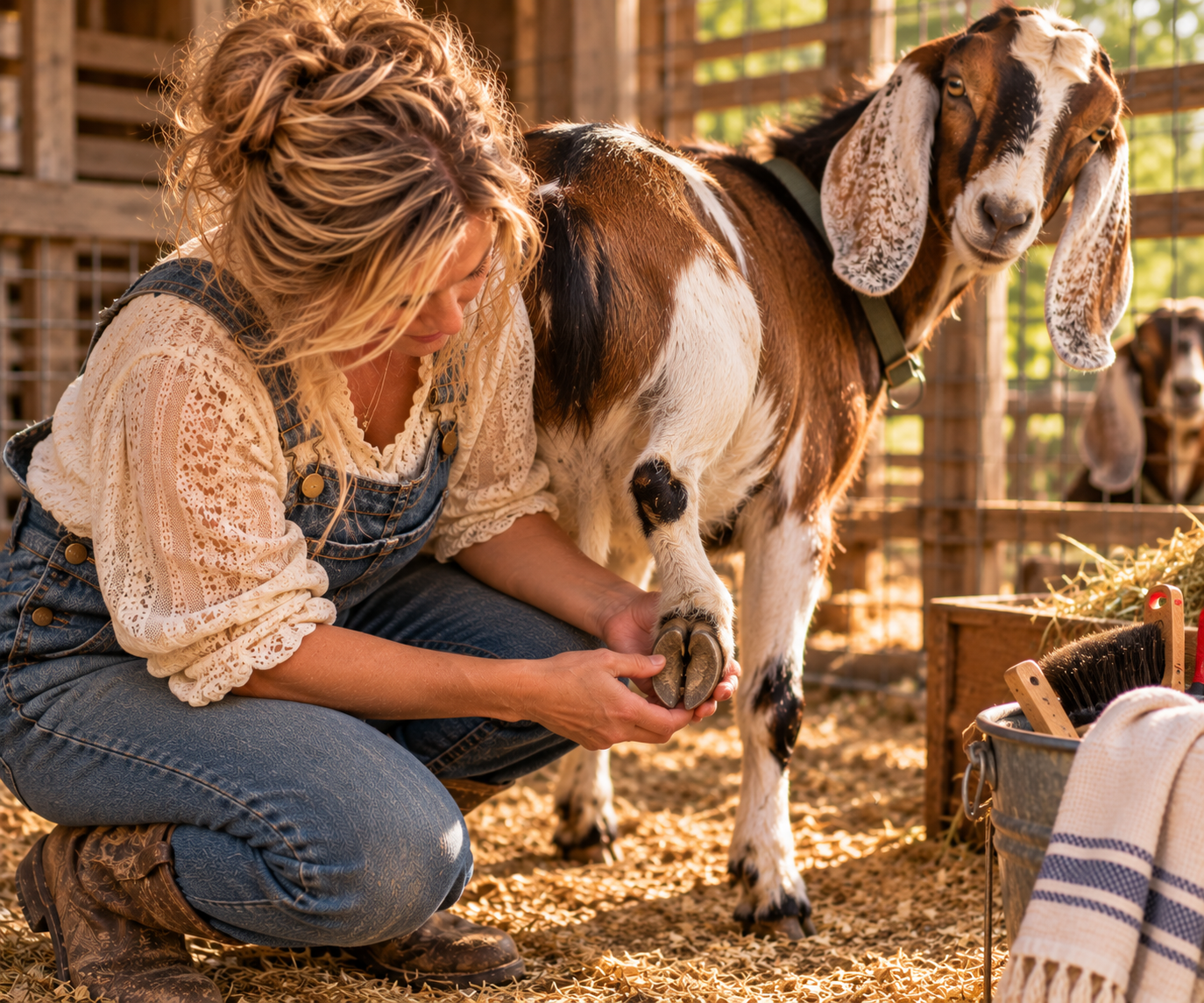
If you’ve ever looked at your goats’ hooves and wondered whether it’s time for another trim, you’re certainly not alone!
Hoof care is one of those important little jobs that comes with raising goats. Whether you have two backyard pets or a small herd, keeping their hooves properly maintained helps them walk comfortably and stay active.
The good news? With the right tools, a little patience, and some practice, routine goat hoof care can become a manageable part of your farm schedule.
Let’s talk about how often goats need their hooves trimmed, what supplies are helpful, and how to recognize when something isn’t quite right.
1. How Often Should You Trim Goat Hooves?
Many goats need their hooves checked and trimmed approximately every 4–8 weeks, although the schedule varies considerably.
Several things affect hoof growth and wear:
- Breed and individual hoof growth
- Age and activity level
- Whether goats walk on rocky ground, dirt, grass, or other surfaces
- Weather and seasonal conditions
- Previous hoof problems
Goats living primarily on soft pasture may need more frequent trimming because their hooves don’t naturally wear down as quickly.
Rather than relying on the calendar alone, inspect your goats’ feet regularly and adjust their trimming schedule based on what you see.
Helpful tip: Write down each trimming date so you can recognize how quickly each goat’s hooves grow.
2. Signs Your Goat May Need a Hoof Trim
Sometimes the signs are easy to spot. Other times, you won’t notice anything until you pick up a hoof and take a closer look.
Watch for:
- Hoof walls curling or folding underneath
- Excessively long or uneven hoof edges
- Dirt and manure becoming trapped in overgrown areas
- Changes in how the goat stands or walks
- Difficulty walking comfortably
A goat that is limping, reluctant to bear weight, or showing swelling, heat, a foul odor, or significant tenderness needs prompt attention. These symptoms can indicate injury or infection rather than ordinary overgrowth.
Don’t assume trimming alone will solve a painful hoof problem.
3. Basic Supplies for Goat Hoof Care
You don’t need a complicated collection of equipment to get started.
A few useful supplies include:
- Goat hoof trimmers: Sharp, purpose-made trimmers for removing excess hoof wall
- Hoof pick or small stiff brush: For gently removing dirt and debris
- Clean towels: To help clean and dry the hoof
- Gloves: For protecting your hands and improving your grip
- Good lighting: So you can clearly see what you’re doing
- A secure stand or safe handling area: To keep your goat steady during hoof care
A properly fitted goat stand can make the job much easier, especially when you’re working alone.
Keep your tools clean, and disinfect them between animals when infection is suspected.
4. How to Trim Goat Hooves Safely
If you’re new to trimming, having an experienced goat keeper, veterinarian, or qualified livestock professional demonstrate the process in person is a wonderful place to start.
Here’s a general overview of routine trimming:
Step 1: Secure your goat safely.
Use a properly fitted stand or have an experienced helper hold the goat. Avoid forcing a leg into an uncomfortable position.
Step 2: Inspect and clean the hoof.
Gently remove loose dirt and manure so you can see the hoof walls and sole.
Step 3: Identify overgrown hoof wall.
Look for edges that extend beyond or fold underneath the sole.
Step 4: Trim small amounts at a time.
Carefully remove excess hoof wall, working gradually toward a more even, natural weight-bearing surface. Avoid cutting into sensitive tissue or trying to remove too much at once.
Step 5: Recheck the hoof.
Look for cracks, unusual discoloration, odor, tenderness, or other concerns before putting the foot down.
If you’re unsure how much to trim, stop and ask an experienced professional. Aggressive trimming can cause bleeding, pain, and lameness.
5. Common Goat Hoof Problems to Watch For
Regular hoof inspections give you a chance to catch problems before they become more serious.
Overgrown hooves
Hoof walls may curl or become uneven, changing how a goat distributes its weight.
Hoof cracks
Cracks may develop from excessive growth, injury, or other hoof-health problems. Deep or painful cracks should be evaluated.
Foot rot and other infections
Some hoof infections can cause lameness, swelling, discharge, and a strong unpleasant odor.
Because infectious hoof diseases can spread between animals, isolate a goat with suspected contagious foot disease until your veterinarian advises you on treatment and herd precautions.
Lameness
Limping isn’t always caused by overgrown hooves. Injuries, joint problems, abscesses, and infections are also possibilities.
Persistent or sudden lameness warrants veterinary attention.
6. Make Hoof Trimming Less Stressful
Not every goat enjoys having its feet handled!
A few habits can make routine care easier:
- Practice briefly lifting and releasing each hoof between trims.
- Reward calm behavior with an appropriate treat.
- Work in a quiet, familiar area.
- Choose a time when you aren’t rushed.
- Keep your supplies nearby before beginning.
- Take breaks when needed.
Never wrestle a frightened goat into an unsafe position. Calm, consistent handling helps build trust over time.
7. Keep a Simple Goat Hoof-Care Record
One of the easiest ways to stay on top of hoof care is to keep a record for each goat.
After every inspection or trimming session, write down:
- Goat’s name
- Date of hoof inspection or trimming
- Any unusual growth or damage
- Signs of tenderness or lameness
- Follow-up care recommended by your veterinarian
- Approximate date to check again
This is especially helpful when you have multiple goats with different hoof-growth patterns.
🌿 Keep Your Goat Care Organized with Cartecay James
Between feeding, minerals, hoof trimming, and health records, there can be quite a lot to remember!
Our Cartecay James Goat Care & Herd Planner is a 16-page printable PDF designed to help backyard goat owners keep important care information together.
Use its recordkeeping pages to stay organized as you care for your herd.
Instant digital download. No physical product will be shipped.
A Little Routine Care Goes a Long Way
Keeping goats is full of those everyday responsibilities that might seem small but make a big difference over time.
Checking their feet regularly, learning what healthy hooves look like, and keeping simple records can help you spot changes early and make routine care easier.
And remember, you don’t have to learn everything overnight. Every goat keeper starts somewhere!
Cartecay James — Rooted in the Willows 🌿
This article is for general educational purposes and isn’t a substitute for hands-on instruction or veterinary advice.
Leave a Reply